

L&S Waste Management News Round – October 2026
The UK waste management and construction recycling sector is undergoing significant change, with Digital Waste Tracking now underway, new investment in construction and demolition waste recycling, growing recycled aggregate capacity and important developments in waste infrastructure across Hampshire and the South Coast.
For construction companies and other commercial waste producers, many of these developments point in the same direction: greater traceability, better waste segregation and a growing emphasis on recovering valuable materials rather than treating them as mixed waste.
L&S Waste Management provides construction, commercial and domestic waste management services across Hampshire and the South Coast, including Portsmouth, Southampton and Fareham. Here is our latest round-up of some of the most important UK waste management and construction recycling stories, and what they could mean for businesses and waste producers in our region.
What Does Digital Waste Tracking Mean for UK Businesses?
One of the biggest changes to UK waste regulation in years began on 1 October, with more than 12,000 permitted waste sites across England required to start reporting the waste they receive through the Government’s new Digital Waste Tracking system.
Under the first phase, permitted waste receiving sites must digitally record details of controlled waste received and submit the required information within two working days.
The Government says Digital Waste Tracking will create a clearer audit trail as waste moves between producers, carriers and receiving facilities, helping regulators understand where material has come from and where it ultimately ends up. It should also make it harder for illegal waste operators to conceal suspicious waste movements or falsify paperwork.
Further stages will extend digital tracking across more of the waste chain.
L&S View
Greater transparency should ultimately benefit responsible waste producers and operators.
Every business producing waste has a Duty of Care to ensure it is handled correctly, so knowing who is collecting it and where it ultimately goes is increasingly important.
For construction businesses in particular, Digital Waste Tracking reinforces the importance of accurate waste records and using reputable, properly licensed waste management companies.
It also gives regulators significantly better information with which to identify suspicious waste movements and target operators who attempt to undercut legitimate businesses through illegal disposal.
How Much Waste Does the UK Construction Industry Produce?
New Government statistics published in September have provided another reminder of the enormous role construction plays in the UK’s waste challenge.
According to the latest Government waste data, England generated an estimated 178.1 million tonnes of waste in 2024.
Construction, demolition and excavation waste, including dredging material, accounted for approximately 66% of that total, making construction comfortably the country’s largest source of waste. Commercial and industrial activities accounted for a further 17%, while households produced around 12%.
The scale of those figures explains why construction waste recycling, material reuse and better waste segregation are so important to the UK’s transition towards a more circular economy.
L&S View
Talking about “construction waste" as a single material can be misleading. A typical project might generate soil, concrete, bricks, hardcore, timber, metals, plastics, packaging and mixed general waste, all of which can have very different recycling and recovery routes.
That distinction can also affect cost.
Where sufficient volumes are generated, separating materials such as clean soil, concrete, hardcore, timber and metals can provide more direct recycling routes, and single-stream waste can often cost less to manage than mixed construction waste.
With residual waste processing and disposal capacity under pressure, there is an increasingly strong environmental and financial argument for contractors to consider waste segregation before work begins.
New 250,000-Tonne Construction Waste Recycling Facility Opens
Investment in construction and demolition waste recycling continues, with Heidelberg Materials UK opening a major new facility in Leeds.
The new construction, demolition and excavation (CD&E) waste recycling facility has capacity to process approximately 250,000 tonnes of material each year, including concrete, bricks and soils.
Suitable incoming construction waste can be processed and returned to productive use in recycled construction products, helping to reduce the requirement for virgin materials.
Contractors can also tip suitable construction waste at the facility before collecting recycled or primary aggregates and asphalt, creating a more circular movement of materials.
Heidelberg Materials has indicated that the development is one of several CD&E recycling facilities it intends to open.
L&S View
This is a good illustration of where construction waste management is heading.
Concrete, bricks, soils and other inert materials do not necessarily need to be regarded as something that simply has to be disposed of. Properly separated and processed, they can become raw materials for the next construction project.
The principle is straightforward: recover suitable construction waste, process it as locally as possible and return the resulting material to productive use.
That reduces demand for virgin resources, keeps usable material out of disposal routes and can reduce unnecessary vehicle movements.
Construction Waste Turned Back into Recycled Aggregates
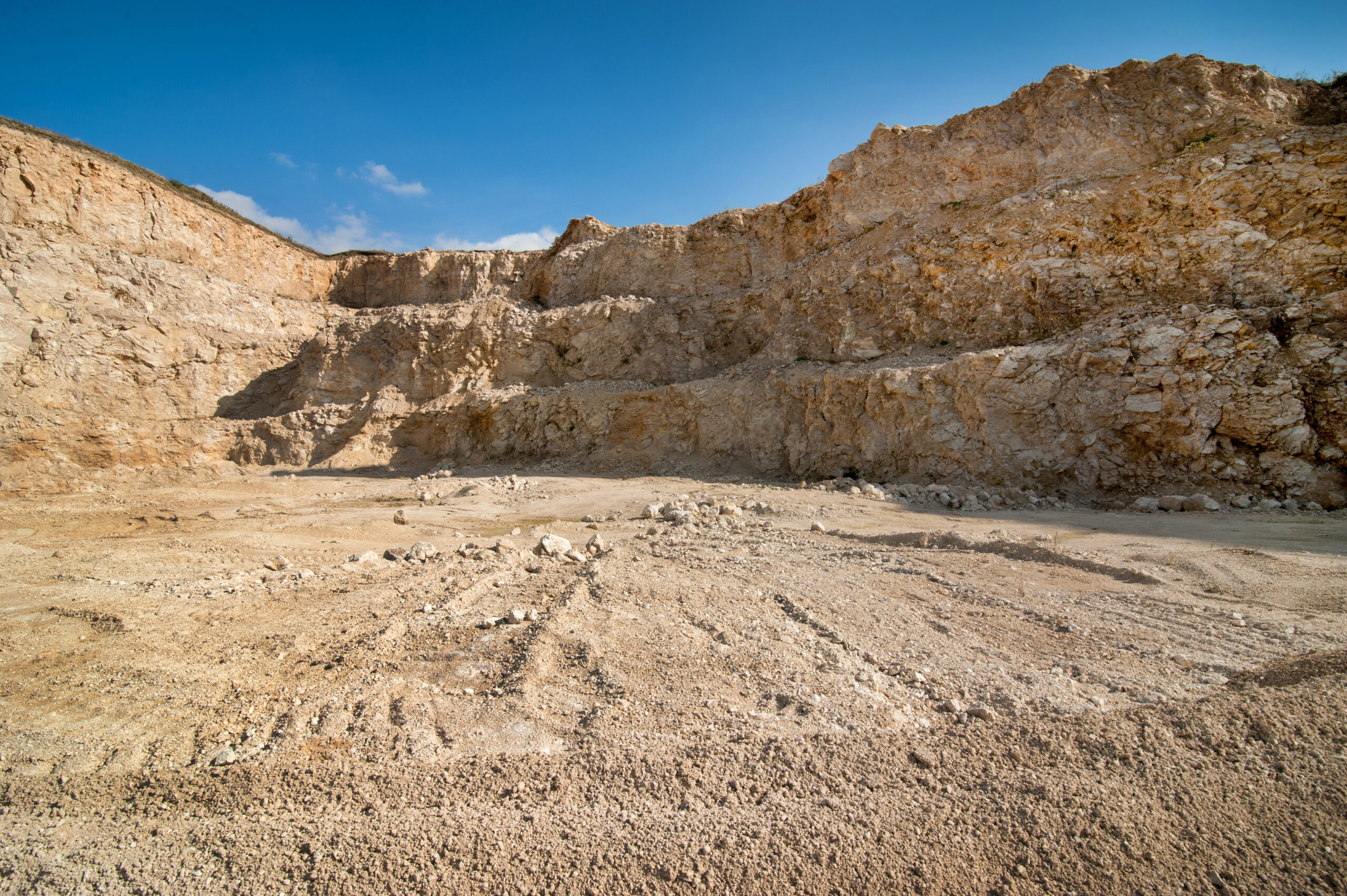
Another significant investment in circular construction has been announced closer to the South, with Grundon and Down To Earth Developments investing £2.6 million in a recycled aggregates operation at Kennetholme Quarry near Thatcham, Berkshire.
The new Regolite operation is expected to process around 120,000 tonnes of non-hazardous construction, earthworks and development waste each year, including soils and stones.
Incoming materials will be washed and processed into products including sharp sand, soft sand and different grades of recycled stone.
It creates the potential for material removed during construction and development projects to return to the industry as a usable aggregate rather than being treated simply as waste.
L&S View
This is circular construction in practice and is particularly relevant to construction waste producers across southern England.
Soils, concrete, stones and hardcore can all have considerable value when kept suitable for recovery. Once these materials become mixed or contaminated with other waste, however, recycling them can become considerably more difficult.
It is another reason why waste segregation should be considered at the planning stage of a construction project rather than once the skips begin filling up.

How Is Hampshire Investing in Recycling Infrastructure?
The Hampshire Minerals and Waste Plan 2026 sets the framework for minerals and waste development across Hampshire, Portsmouth and Southampton, together with relevant parts of the New Forest and South Downs National Parks, through to 2040.
Hampshire County Council, Portsmouth City Council and Southampton City Council have also approved a joint £50.5 million investment in household recycling infrastructure, including a new materials recovery facility at Eastleigh and improvements to the existing Portsmouth facility.
The new Eastleigh facility is expected to open in 2028 and will enable a wider range of recyclable materials to be processed.
L&S View
Waste infrastructure rarely attracts widespread attention until there isn’t enough of it.
As we highlighted in our previous industry news round-up, when processing or disposal capacity disappears, material may need to travel further and the remaining facilities come under additional pressure.
Investment in local waste recycling and recovery capacity is therefore important for creating a more resilient waste management system across Hampshire and the South Coast.
The longer-term opportunity is not simply to process more waste locally, but to recover more useful material from it and return those resources to the economy.
Waste Crime and Illegal Dumping Remain Under Scrutiny
Waste crime continues to be a major focus for regulators, with recent enforcement activity demonstrating the potential consequences of failing to manage waste correctly.
Locally, an Environment Agency prosecution involved the illegal deposit of around 200 tonnes of shredded household and commercial waste at Kingsclere Lime Quarry near Tadley, as part of wider illegal waste activity in Hampshire and Cambridgeshire.
Seven men were sentenced at Winchester Crown Court following the Environment Agency investigation.
The Environment Agency has also taken enforcement action at a waste treatment operation in Portsmouth as part of Operation Unite, its nationwide initiative targeting potentially problematic permitted waste sites.
L&S View
These cases reinforce why businesses should never choose a waste contractor on price alone.
Businesses producing commercial or construction waste retain responsibilities for how that material is managed. Using an appropriately licensed waste carrier, keeping accurate records and understanding where waste is being taken are fundamental parts of fulfilling that Duty of Care.
Digital Waste Tracking should make waste movements increasingly transparent, providing regulators with better information and making it harder for unscrupulous operators to hide behind incomplete or falsified paperwork.

Why Construction Waste Segregation Is Becoming Increasingly Important
Look across many of the UK’s latest waste management stories and a common theme emerges: we need to get better at keeping valuable materials out of mixed waste.
The combination of pressure on residual waste capacity, investment in construction waste recycling, growing recycled aggregate production and increased regulatory scrutiny is changing the economics of waste management.
For construction businesses, this means thinking about waste before a project begins.
If a project is likely to generate significant quantities of soil, concrete, bricks, hardcore, timber or metals, it is worth discussing with your waste provider whether those materials can be separated.
It doesn’t necessarily mean having numerous skips on every site. The right solution depends on the project, the quantities involved and the available space.
However, where sufficient volumes of recyclable material are generated, separating a single waste stream can potentially cost less than disposing of the same material as mixed waste.
It also gives the waste industry more options for recovering those materials and returning them to productive use.
At L&S Waste Management, we provide construction and commercial waste management across Hampshire and the South Coast, including Portsmouth, Southampton, Fareham and surrounding areas. Our recycling facilities process construction and commercial waste including wood, metals, soils, hardcore and plastics, helping to recover useful materials and reduce the amount of residual waste requiring disposal.
The principle is increasingly simple: the less we mix together, the more we can recover – and in many cases, the less it can cost to manage.
UK Waste Management: Frequently Asked Questions
What is Digital Waste Tracking?
Digital Waste Tracking is a new UK system designed to provide greater visibility of waste movements. The first phase began in England on 1 October 2026, requiring permitted waste receiving sites to digitally report information about controlled waste they receive.
How much waste does the construction industry produce?
According to the latest Government statistics, construction, demolition and excavation waste accounted for approximately 66% of all waste generated in England in 2024.
Is separated construction waste cheaper than mixed waste?
It can be. Where sufficient quantities are generated, clean single-stream materials such as soil, concrete, hardcore, timber or metals can have more direct recycling and recovery routes. This can make them cheaper to manage than mixed waste that requires additional sorting and processing.
Why should construction waste be separated?
Separating construction waste can improve recycling and recovery opportunities, reduce the amount of residual waste requiring treatment or disposal and, depending on the material and quantity involved, potentially reduce waste management costs.
Where does L&S Waste Management operate?
L&S Waste Management provides construction, commercial and domestic waste services across Hampshire and the South Coast, including Portsmouth, Southampton, Fareham and surrounding areas.
Need Help With Your Construction Waste?
For advice on construction waste management, commercial waste, waste segregation, skip hire, roll-on roll-off containers, grab hire or recycled aggregates in Hampshire and the South Coast, contact L&S Waste Management on 01329 840000.
Book skips, grabs and concrete online at www.lswaste.co.uk.
L&S Waste Management is one of the South’s leading waste management and recycling companies, providing services to construction, commercial and domestic customers across Hampshire and the South Coast. L&S Waste Management is part of Biffa.

Company Bio
Find out why L&S is no ordinary waste management company.
Go >


L&S In The Community
Learn more about our community projects.
Go >


Meet The Team
An introduction to the L&S management.
Go >

CONTACT US
FOLLOW US

Big pour? Awkward access? Lots of concrete to move?🎵 Pump up the volume.L&S Concrete Pumping gets concrete from the truck to where it needs to be, helping reduce the hard graft and keep the job moving.Concrete pumping without the song and dance.👉 Order concrete online:buff.ly/sgc3Xqn#Concrete #ConcretePumping #Construction #LSConcrete
Still shifting concrete by wheelbarrow? You pour thing. 😩There is an easier way.L&S Concrete Pumping gets concrete where you need it quickly and efficiently, with a lot less legwork.Give yourself a break.👉 Order concrete online:buff.ly/sgc3Xqn#Concrete #ConcretePumping #Construction #Builders #LSConcrete
Every great construction site needs a good number two. 🚽Fortunately, we can supply as many as you need.Portable toilet hire from L&S, delivered to site and ready when nature calls.👉 Book online: buff.ly/6nl4ha6#PortableToiletHire #ConstructionHumour #SiteLife #LSWaste
AFC Southsea U8s are looking super smart in their new L&S Waste sponsored kits! ⚽👏We’ve been proud sponsors of Portsmouth FC for years, but Pompey might have some competition for the best dressed team in town! It’s a pleasure to support the next generation of local footballers through our Community Fund.Good luck for the season, we’ll be cheering you on! 💛#AFCSouthsea #GrassrootsFootball #CommunitySupport
Clean, reliable and delivered direct to site.👉 Book online: buff.ly/6nl4ha6#PortableToilets #construction #SiteLife #LSwaste
MESSAGE US
Company Information
Incorporated in England and Wales.
Registration No: 03475329
VAT No: 537 911 627
Registered Carrier Number: CBDU198877
Registered Office: Coronation Road,
Cressex, High Wycombe,
Buckinghamshire HP12 3TZ
Awards & Accreditation